


Feature story, written by Sani Idris Abdulrahman
Across homes, markets, farms and institutions, women continue to play a central role in sustaining families and economies. Yet experts say their contributions remain under-recognised in decision-making spaces that shape development.
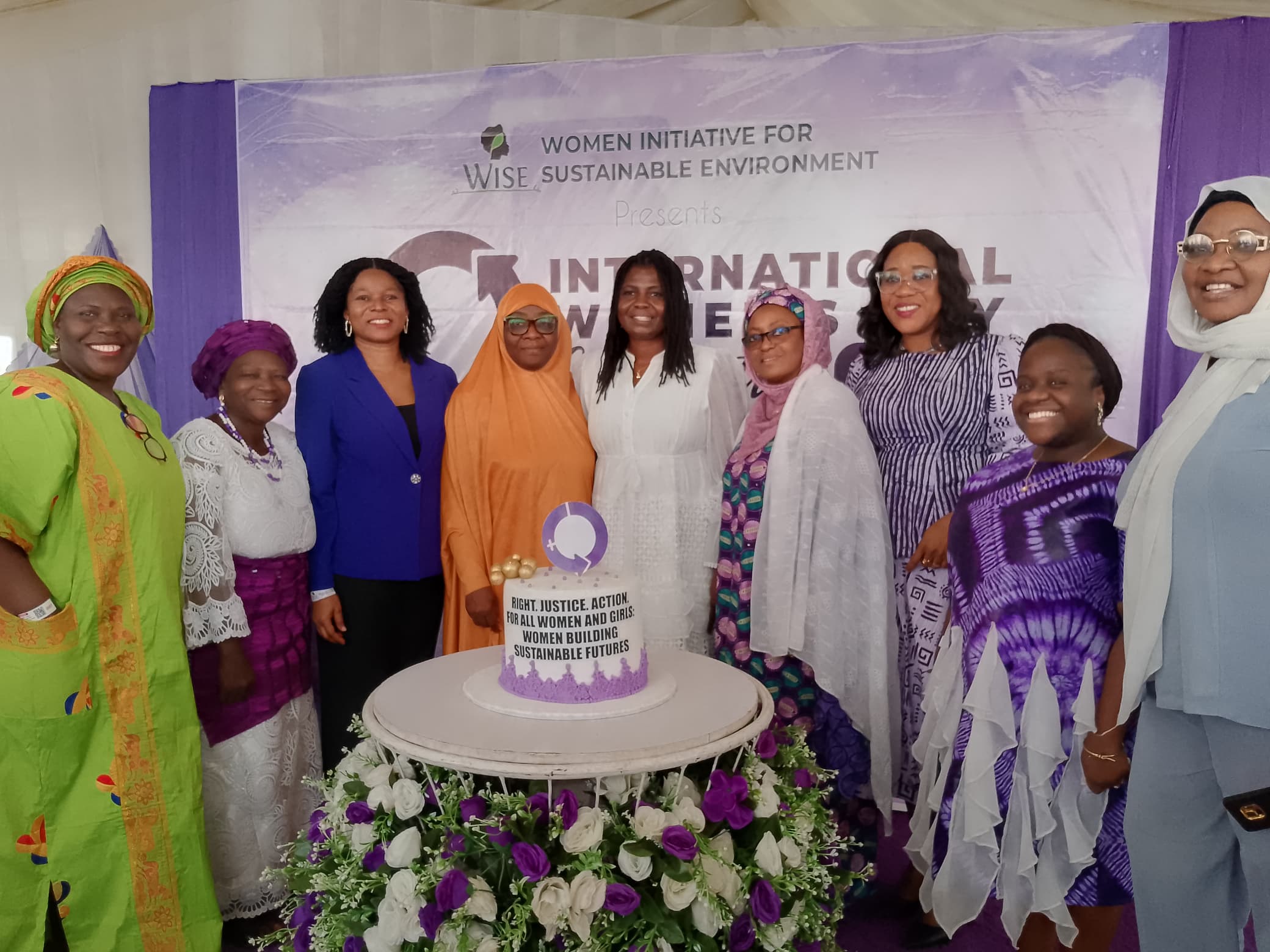
This concern formed the backdrop of discussions in Kaduna as stakeholders from academia, civil society organisations, government institutions and the private sector gathered to commemorate the 2026 International Women’s Day.
The event, organised by the Women Initiative for Sustainable Environment (WISE), brought together women to reflect on their rights, sustainability and inclusive development.
WISE, celebrated the day under the theme “Rights, Justice, Action: Women Building Sustainable Futures,” highlighting the importance of gender equality in shaping inclusive and sustainable development.
Participants at the gathering emphasised that empowering women is not only a social obligation but a practical pathway to economic growth, environmental protection and community resilience.
Delivering the keynote address, Prof. Oluwakemi Adetutu Aliyu, a professor of inorganic chemistry at the Nigerian Defence Academy (NDA), stressed that women must be fully integrated into development strategies.
She noted that sustainable development cannot be achieved when half of the population remains excluded from decision-making structures.
Aliyu urged institutions and policymakers to ensure that women are not merely participants in development processes but architects of policies and systems shaping future societies.
According to her, institutions must reflect critically on whether their structures genuinely support women’s leadership or merely allow them to struggle within existing inequalities.
The professor explained that sustainability encompasses more than environmental protection and includes economic resilience, social justice and strong institutions.
She said sustainable societies are built on systems that endure, including economies that create jobs, communities that remain stable and institutions that protect citizens’ rights.
Aliyu noted that global development frameworks have evolved from the Millennium Development Goals to the broader Sustainable Development Goals aimed at transforming societies structurally.
In these evolving frameworks, she said women are no longer viewed simply as beneficiaries of development programmes but as drivers of social transformation and economic growth.
Highlighting women’s economic contributions, Aliyu said women account for about 60 per cent of Nigeria’s agricultural labour force.
She added that women contribute nearly 80 per cent of food production activities across many rural communities.
Since agriculture contributes roughly 22 per cent to Nigeria’s Gross Domestic Product, she explained that improving women’s productivity in the sector would significantly strengthen the national economy.
“When women are empowered economically, local economies grow stronger and national productivity increases. Investing in women is not charity; it is economic intelligence,” she said.
Aliyu also drew attention to the implications of climate change for Nigeria’s economic future.
She warned that climate change could cost the country between six and 30 per cent of its Gross Domestic Product by 2050 if effective adaptation measures are not implemented.
The professor explained that women play critical roles in food systems, water management and household resilience, making their involvement in environmental governance essential.
She therefore called for greater representation of women in climate policy formulation and environmental decision-making processes.
Aliyu emphasised that women must be included in planning meetings, budgeting processes and policy development if development outcomes are to be equitable.
She also highlighted the importance of girls’ education in strengthening national development.
According to her, about 60 per cent of out-of-school children in Nigeria are girls.
She said educating girls improves household income, reduces child mortality and strengthens civic participation in communities.
Aliyu further emphasised the need to encourage women’s participation in science, technology, engineering and mathematics to drive innovation and green technologies.
She also called on the private sector to support women entrepreneurs through digital inclusion and investment financing.
Aliyu commended WISE for its efforts in promoting environmental awareness and women’s empowerment since its establishment in 2009.
According to her, the organisation has reached more than 120,000 women and girls through empowerment programmes and environmental education initiatives.
She added that WISE has supported the distribution of about 60,000 clean cookstoves to households, reducing emissions while creating economic opportunities for women.
The organisation has also facilitated the planting of 5,000 trees across 220 schools in Kaduna State as part of environmental education efforts.
Aliyu urged governments and development partners to move beyond dialogue to practical policies that expand women’s economic opportunities.
She stressed that enforcing land rights, improving access to finance and strengthening girls’ education remain critical pathways to sustainable development.
Earlier, the Founder and Executive Director of WISE, Mrs. Olanike Olugboji-Daramola, encouraged women to embrace continuous learning and personal growth.
She said women must constantly “learn, unlearn and relearn” in order to rediscover their potential and contribute meaningfully to society.
Olugboji-Daramola explained that WISE integrates environmental sustainability, climate action and peacebuilding into its programmes.
According to her, empowering women as stewards of natural resources is essential for sustainable development.
She stressed that injustice against one woman ultimately affects the entire society.
Olugboji-Daramola therefore urged women not to remain silent when they witness injustice within their communities.
She noted that gender equality should not be seen as a competition between men and women but a shared responsibility for building stronger societies.
The WISE founder also emphasised the importance of education and economic independence for women.
She encouraged participants to develop their talents and pursue their aspirations in order to contribute to national progress.
The event also featured a presentation by legal practitioner Ruth Olajide titled “Intergenerational Rights: Protecting the Future Through Justice Today.”
Olajide explained that protecting the rights of future generations requires deliberate decisions in the present.
She noted that policies relating to environmental protection, governance and social justice directly influence the wellbeing of generations yet unborn.
According to her, sustainable development requires fairness, accountability and responsible leadership.
She therefore urged institutions and individuals to adopt policies that prioritise equity and sustainability.
A panel discussion also provided an opportunity for experts to examine the relationship between women’s leadership, environmental sustainability and inclusive governance.
One of the panelists, Prof. Aisha Abdulkadir, emphasised the importance of education and leadership development for women and girls.
She noted that increasing women’s representation in leadership positions is essential for inclusive policy outcomes.
According to Abdulkadir, when women participate in leadership, policies often reflect broader social realities.
She added that empowering women in education and governance would strengthen national development and social stability.
Another panelist, Mrs. Elizabeth Awan, highlighted the economic challenges faced by women entrepreneurs across Nigeria.
She said many women operate small businesses that sustain families and local communities despite limited access to credit and formal financial services.
Awan explained that improving women’s access to financing would significantly expand small businesses and employment opportunities.
She also called for stronger policy support and mentorship programmes for women entrepreneurs.
Similarly, Mrs. Ngozi Babasanya-Craig spoke on the importance of mentorship and professional support networks for women.
She said many women possess the capacity to lead but often lack opportunities and encouragement to pursue leadership roles.
Babasanya-Craig noted that mentorship programmes help young women build confidence and navigate professional environments.
She therefore urged experienced professionals to mentor younger women and support their leadership journeys.
Participants at the event engaged actively in the discussions, raising questions about gender equality, climate action and women’s participation in governance.
Many emphasised the need for stronger institutional frameworks to address barriers facing women across sectors.
Others highlighted the importance of collaboration between government, civil society organisations and the private sector.
The discussions reinforced the need for practical solutions that empower women and strengthen sustainable development.
Delivering the closing keynote address, Mrs. Christiana Alabi-Akande stressed that sustainable futures depend on women’s leadership.
She cited global statistics showing that women represent nearly half of Nigeria’s population but remain underrepresented in political leadership.
According to her, women currently occupy less than 10 per cent of seats in Nigeria’s National Assembly.
Despite these disparities, she said Nigerian women continue to build homes, businesses and communities that sustain the nation.
Alabi-Akande emphasised that sustainability means creating systems that remain just, inclusive and resilient over time.
She urged women to claim leadership spaces confidently and support one another in their professional and community roles.
The keynote speaker also encouraged women to mentor younger generations and promote values of equality and environmental responsibility.
She stressed that leadership is not defined solely by positions but by the influence individuals exert within their communities.
“Sustainable futures will not fall from the sky,” she said.
“They will be built in classrooms, markets, farms, homes and institutions by women who refuse to shrink.”