


By Abbas Bamalli
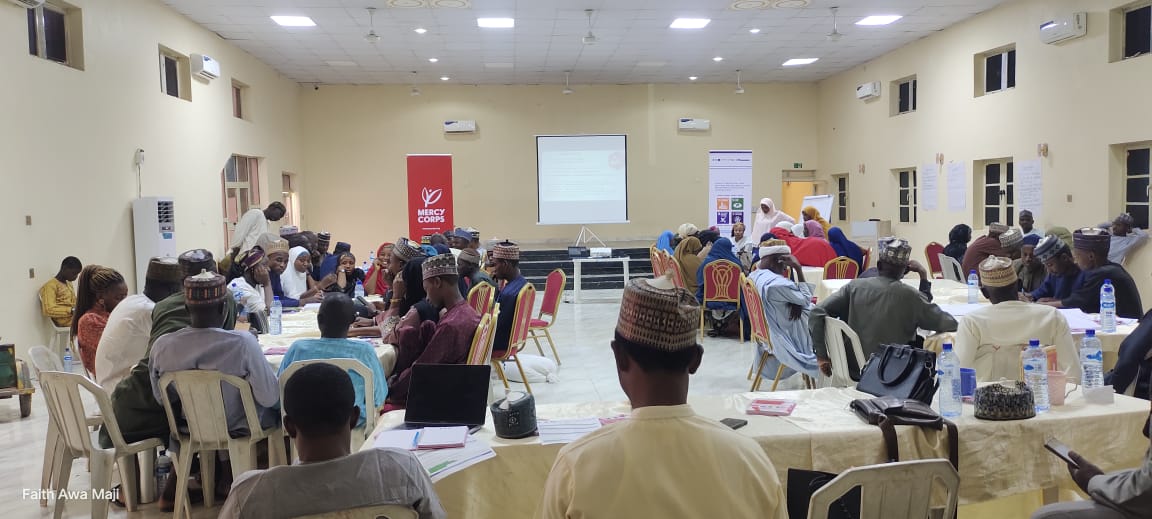
The Conflict Prevention, Crisis Response and Resilience (CPCRR), a project funded by the European Union (EU), has organised a four-day community-based dialogue, advocacy and action-planning training for stakeholders in Katsina.
The programme, which commenced on Tuesday in Katsina, builds on the achievements of the Conflict Mitigation and Community Reconciliation (CMCR) project and aims to deepen community-led peacebuilding efforts in the North-West.
Speaking at the event, the Senior Programme Manager of Mercy Corps, Mr Philip Ikita, said the initiative seeks to promote long-term peace, stability and socio-economic recovery across conflict-affected communities in the region.
According to him, the CPCRR project is being implemented by the International Organisation for Migration (IOM), in partnership with Mercy Corps and the Centre for Democracy and Development (CDD).
Ikita explained that the programme was operating in 48 communities across Zamfara and Katsina States, addressing the root causes of conflict, strengthening community resilience and supporting socio-economic recovery.
“The overall objective is to reinforce peace and socio-economic stability in North-West Nigeria through inclusive, locally driven and sustainable approaches,” he said.
He stated that under the CPCRR programme, Mercy Corps leads activities focused on strengthening community mechanisms for conflict prevention, promoting inclusive dialogue, enhancing resilience to climate-related shocks and implementing community Quick Impact Projects (QIPs).
He added that CPCRR project.was being being implemented in Batsari, Danmusa, Jibia, Kankara, Dandume, Faskari, Sabuwa and Safana Local Government Areas (LGAs) of the state.
Ikita said the four-day engagement brought together community stakeholders from Safana, Sabuwa, Faskari and Dandume LGAs for two major capacity-building activities.
According to him, the first phase is a two-day community-based dialogue and advocacy training designed to build participants’ capacity on Mercy Corps’ approach to dialogue, advocacy, evidence-based engagement and interaction with decision-makers.
He said the training was expected to improve participants’ practical skills, enhance their understanding of dialogue and advocacy strategies, and support the identification of priority issues with realistic community action plans.
“The training will also strengthen the ability of stakeholders to propose inclusive and sustainable solutions rooted in local realities and to engage constructively in community decision-making processes,” Ikita said.
He added that the second phase was a two-day community-based action planning training aimed at equipping participants with the knowledge and tools needed for effective planning and implementation of community projects.
According to him, the training will enable stakeholders to conduct needs assessments, set development goals, design action plans and implement activities effectively, while promoting collective ownership and inclusive decision-making.
Ikita said participants were drawn from farmers, herders, women groups, Community-Based Organisations (CBOs), Persons with Disabilities (PWDs), as well as relevant government Ministries, Departments and Agencies (MDAs).
NAN