


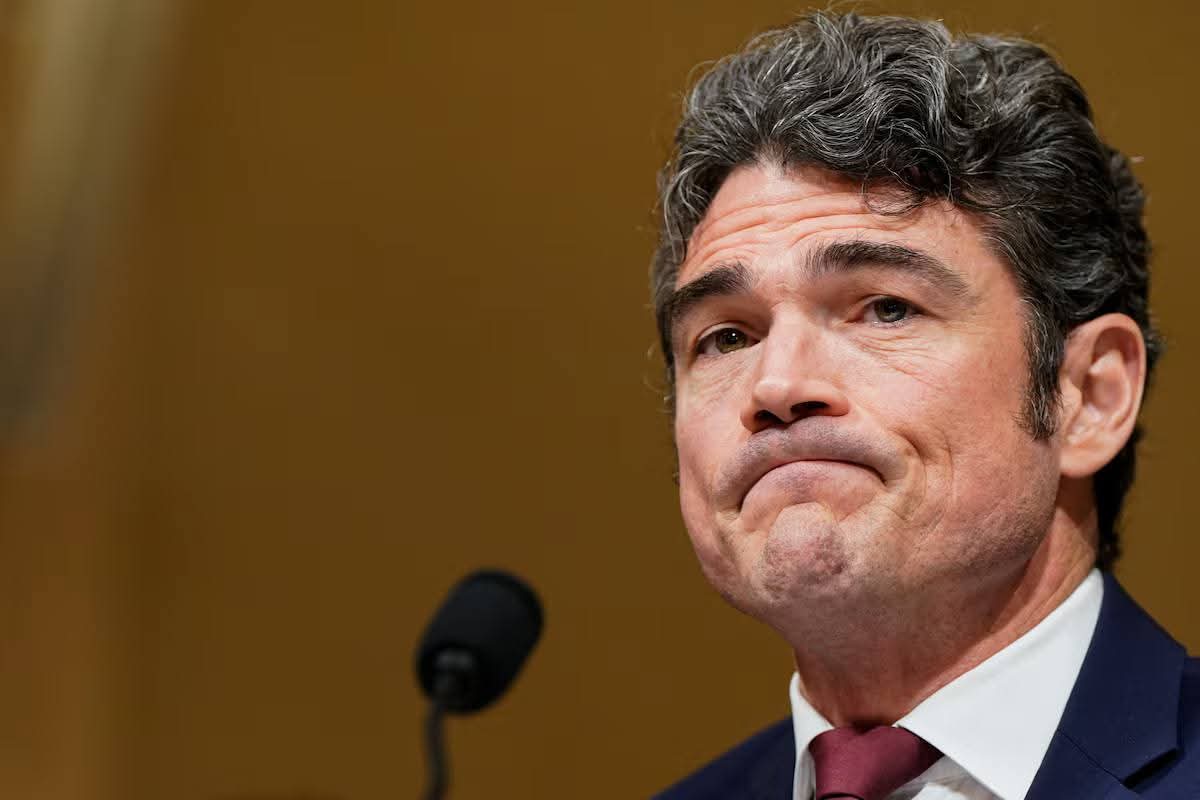
The Director of the United States National Counterterrorism Center, Joseph Kent, has resigned from his position in a dramatic protest against the ongoing U.S.–Israel war involving Iran, declaring that Tehran posed “no imminent threat” to the United States.
Mr Kent, one of the most senior intelligence officials in the administration of President Donald Trump, announced his decision in a resignation letter made public on Tuesday, citing deep disagreement with the rationale for the conflict.
“I cannot in good conscience support the ongoing war in Iran,” Kent wrote. “Iran posed no imminent threat to our nation,” he added, questioning the legal and strategic basis for the military action.
First major resignation over war
Kent’s exit makes him the highest-ranking U.S. official to step down over the Iran conflict since hostilities escalated in late February, underscoring growing unease within Washington’s intelligence and security circles.
According to reports, the resignation caught many intelligence officials off guard and has exposed internal divisions over the justification for the war and the role of allied influence in U.S. foreign policy.
In his letter, Kent also suggested that the conflict was driven in part by pressure linked to Israel, a claim likely to intensify debate in Washington over the origins and motivations behind the war.
Questions over legality and justification
Kent’s assertion that Iran posed no imminent threat is particularly significant because U.S. law and international norms generally require evidence of an immediate danger to justify launching military action.
His remarks are expected to fuel scrutiny from lawmakers, legal experts, and foreign policy analysts over whether the war meets those thresholds.
Background and role
A former U.S. Army Special Forces soldier and CIA officer, Kent had led the National Counterterrorism Center since 2025, serving as the principal adviser to the president on counterterrorism threats.
He was confirmed by the Senate despite controversy surrounding his political views and past associations, and was considered a close ally of Director of National Intelligence Tulsi Gabbard.
Silence from White House
As of the time of filing this report, the White House and the Office of the Director of National Intelligence had not issued official statements on Kent’s resignation.
Meanwhile, the war continues to escalate across the Middle East, with rising casualties, regional instability, and mounting global concern over its broader implications.
Kent’s departure is likely to intensify both domestic and international scrutiny of the conflict—and could signal further dissent within the U.S. government in the days ahead.
Daily Nigerian